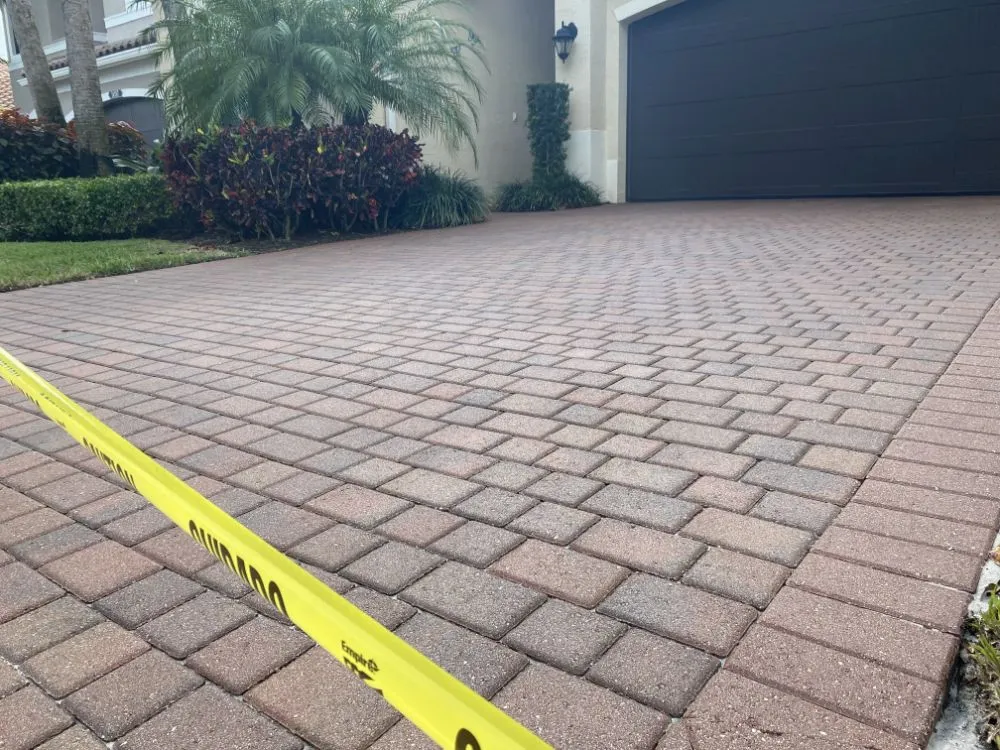
For many municipal agencies, contracting a paver repair project is unfamiliar territory. Public works directors and procurement officers often manage these projects once every several years — not frequently enough to build deep institutional knowledge of how the work actually unfolds in the field. That uncertainty can create hesitation in the procurement process, misaligned expectations between agency staff and contractors, and gaps in project oversight that allow quality problems to go undetected until after the contractor demobilizes. This guide exists to close that gap. We walk through every phase of a professional municipal paver repair project — from the first site visit through final documentation — so your agency knows exactly what to expect, what questions to ask, and what deliverables to require at each stage. Whether you are managing your first paver repair contract or reviewing a proposal for a multi-block ADA remediation project, this guide will help you engage your contractor from a position of informed confidence.
Phase 1: Initial Site Assessment and Scope Development
Every professional municipal paver repair engagement begins with a formal site assessment — not an informal walk-through, but a structured field investigation using calibrated measurement tools and systematic documentation protocols. During this visit, the contractor's assessment team uses GPS-referenced digital profilometry to map vertical displacements across the paver surface, identifying every location where settlement, frost heave, or root uplift has created a vertical change approaching or exceeding the 1/4-inch ADA trip hazard threshold. Slope readings are taken at regular intervals — typically every 25 feet — using a calibrated digital inclinometer, recording both running slope and cross slope at multiple points across the path width. Joint conditions are assessed for sand erosion, gap width, and structural stability, and detectable warning surfaces at curb ramps are evaluated against PROWAG R305 dimensional and color contrast requirements.
Photo documentation accompanies every measurement, creating a georeferenced defect inventory that forms the foundation of the repair scope. This inventory is not merely a field record — it is the document that drives unit pricing in the proposal, demonstrates due diligence in the agency's ADA Transition Plan barrier inventory, and provides legal protection in the event of a future trip-and-fall claim. From the assessment data, the contractor develops a written scope of work that identifies repair locations by GPS coordinate, defect type, and estimated quantity of paver units requiring removal, re-leveling, or replacement. Agencies should expect the site assessment to take one to three days depending on the size of the paver network, and the delivery of a formal written scope and proposal within seven to fourteen calendar days of the assessment visit.
Phase 2: Proposal, Permitting, and Scheduling
A professional paver repair proposal for a municipal contract is a detailed, itemized document — not a single lump-sum number. Expect unit pricing for each category of work: paver removal and re-setting per square foot, subbase recompaction per square foot, paver replacement per unit, joint re-sanding per square foot, and detectable warning surface installation per square foot. Unit pricing allows the agency to validate quantities against the assessment inventory, adjust scope during construction if actual field conditions differ from the assessment findings, and compare bids on an apples-to-apples basis. The proposal should also include a project schedule showing mobilization date, estimated daily production rates, phasing if the work covers multiple locations, and a projected substantial completion date. Contingency allowances for weather delays and unforeseen subbase conditions should be explicitly stated rather than embedded in unit prices.
Municipal paver repair typically requires coordination across several permitting and notification channels before mobilization. A right-of-way encroachment permit is required from the city or county for any work within a public street or sidewalk corridor. Indiana 811 utility locate requests must be submitted at least three full business days before excavation — even shallow paver removal work — and the contractor is responsible for marking and protecting all identified utilities. If the project is in a business improvement district, historic district, or near a scheduled public event, the contractor must coordinate with those stakeholders to minimize impact on commerce and pedestrian access. Agencies should build two to four weeks of permitting and scheduling lead time into their project timelines between contract execution and construction start.
Phase 3: Site Preparation and Safety Setup
Before the first paver is lifted, the contractor establishes a fully compliant traffic control and pedestrian safety plan. All traffic control measures must conform to the Manual on Uniform Traffic Control Devices (MUTCD) Part 6, including advance warning signs, channelizing devices, and work zone lighting for any after-hours activity. The traffic control plan is typically submitted to the agency's public works or traffic engineering division for review and approval before mobilization. For projects on arterial streets or near signalized intersections, coordination with the city's traffic operations center may be required to manage signal timing during construction. Every aspect of the traffic control setup must be documented with time-stamped field photographs to demonstrate MUTCD compliance — a critical record in the event of any work-zone incident claim.
Providing an ADA-compliant temporary pedestrian route is not optional during municipal paver construction — it is a federal mandate under ADA Title II, which requires that temporary measures maintain accessibility for people with disabilities throughout construction. This means the temporary route must be firm and stable (not gravel or uneven ground), at least 4 feet wide, separated from vehicle traffic by adequate channelization, and provided with detectable edge protection per PROWAG R204. Signage directing pedestrians to the temporary route must be visible and ADA-compliant. Material staging areas must be configured so that equipment and material storage does not encroach on the temporary pedestrian path. Agencies should require the contractor to submit the temporary pedestrian route plan as a specific deliverable prior to mobilization, not as an afterthought once construction begins.
Phase 4: Paver Repair and Restoration
The physical repair sequence for a re-leveling repair begins with the careful removal of paver units in the affected area. Experienced crews use specialized lifting tools — not improvised pry bars — to extract pavers without chipping edges or damaging adjacent units. Each removed paver is catalogued by position so it can be reset in its original location and orientation, preserving the visual character of the paver pattern. Beneath the removed pavers, the contractor excavates the bedding sand layer and any compromised base material, compacting the exposed subbase to the specified density using a plate compactor. Fresh bedding sand is screeded to the precise grade required to bring the reset paver surface into ADA-compliant slope alignment. Pavers are then re-set by hand, tapped to final grade with a rubber mallet, and checked with a straightedge and digital inclinometer before the section is approved for joint sanding.
Paver units that are cracked, spalled, or missing are replaced with matching material sourced from the project's material allowance or the agency's inventory of spare pavers stored from the original installation. A professional contractor maintains a network of paver suppliers and can source matching units in the correct color, texture, and dimensional format for virtually any paver specification in current production — and can advise the agency on the closest available match for discontinued products. Once all paver units are re-set and replacement units installed, the entire repair area receives a fresh application of polymeric joint sand. The sand is broadcast, swept into joints, compacted with a plate compactor, and activated with a controlled water application that hardens the polymer binders to create joints that are highly resistant to washout and erosion. Detectable warning surface panels are installed per PROWAG R305 dimensional requirements at any curb ramp within the repair zone, using INDOT QPL-approved products for projects involving state right-of-way or LPA funding.
Phase 5: Quality Assurance and ADA Compliance Verification
Quality assurance is not the same as quality inspection — and the distinction matters for municipal contracts. Quality inspection is reactive: someone checks the work after it is done and identifies problems. Quality assurance is systematic: measurements are taken at defined intervals throughout the repair process, before the joint sand is applied and before the traffic control is removed, so that any deficiency can be corrected while the crew and equipment are still on-site. On a professional municipal paver repair project, the contractor should perform post-repair profilometry readings at every repaired location, documenting the corrected vertical displacements and confirming that no vertical change greater than 1/4 inch remains within or at the edges of the repair zone. Slope readings are taken at the same measurement stations used during the initial assessment, providing a direct before-and-after comparison. Joint widths are checked with a feeler gauge at representative locations to confirm compliance with the 1/2-inch PROWAG opening limit.
The formal deliverable from this phase is an ADA Compliance Verification Report — a written document that lists every repaired location by GPS coordinate, records the pre-repair and post-repair measurements for each defect type, confirms the installation specifications for any new detectable warning surfaces, and certifies that the completed work meets the 2010 ADA Standards for Accessible Design and applicable PROWAG requirements. This report is not merely a contractor deliverable; it is a critical asset for the agency's ADA Transition Plan documentation, demonstrating that identified barriers have been remediated and that the agency is actively progressing toward program access compliance. Any punch list items — locations where a deficiency was identified during the QA measurement process — are documented in writing with a scheduled correction date before the contractor demobilizes.
Phase 6: Project Closeout and Maintenance Recommendations
Project closeout on a professional municipal paver repair contract produces a structured documentation package that the agency retains as a permanent record. The package includes: the original assessment report with GPS-referenced defect inventory, the ADA Compliance Verification Report with before-and-after measurements, time-stamped before-and-after photography for every repair location, material certifications and INDOT QPL documentation for all installed products, as-built GIS data showing the location and extent of all completed repairs, and the contractor's signed warranty certificate with explicit terms and coverage scope. This documentation package should be delivered in both digital format and hardcopy, and archived by the agency as part of its ADA Transition Plan barrier remediation records. Warranty terms for professional municipal paver repair typically cover workmanship defects for two to three years, with material warranties passed through from product manufacturers for detectable warning surface panels.
The closeout meeting — a brief on-site walk with the agency's project representative — is the appropriate venue for the contractor to present the completed documentation package and deliver maintenance recommendations tailored to the specific conditions of the repaired installation. These recommendations should include a suggested schedule for the next joint re-sanding cycle, guidance on cleaning protocols to prevent biological growth in shaded sections, any drainage improvements that would slow future deterioration, and a recommended timeline for the next formal ADA condition assessment. For agencies without an existing preventive maintenance program, the closeout meeting is the natural point at which to discuss transitioning from a project-based repair relationship to an annual maintenance agreement — one that provides consistent, budgetable coverage of the paver network rather than reactive response to accumulated deferred maintenance. The investment made in the repair project is best protected by a structured maintenance program that preserves the restored surfaces for decades to come.