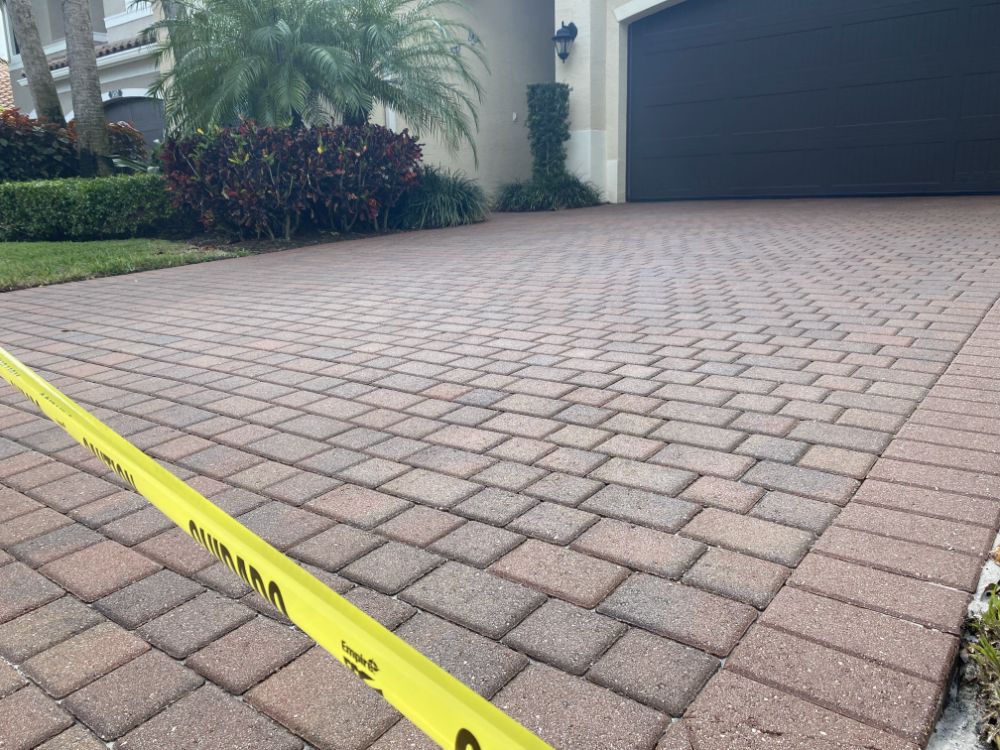
Most municipal public works departments understand, in principle, that non-compliant paver surfaces create legal exposure. What few department directors have quantified is the full financial consequence of deferring remediation — not just the fine for a single violation, but the cascading costs that compound from the moment a hazard is documented until a settlement check clears years later. The picture that emerges from federal enforcement data, tort claims records, and insurance industry reporting is sobering: a single deferred paver repair costing $400 to $800 can, within three to five years, generate a liability event valued at $250,000 to $2 million or more. This article quantifies every layer of that exposure — federal civil penalties under Title II of the ADA, personal injury tort liability, DOJ consent decree remediation costs, insurance premium escalation, and the indirect administrative burden that consumes staff time and municipal credibility. The goal is to give public works directors, city attorneys, and budget officers the data they need to make the case for proactive paver maintenance investment at the next council session — before the alternative makes the argument for them.
Federal Civil Penalties Under ADA Title II
Title II of the Americans with Disabilities Act prohibits any public entity — including cities, counties, state agencies, and public universities — from discriminating against individuals with disabilities in the provision of programs, services, or activities. Where a non-compliant paver surface prevents or impedes a person with a disability from accessing a public right-of-way, plaza, or facility, that non-compliance constitutes discrimination under the statute. The Department of Justice is authorized under 42 U.S.C. Section 12188(b)(2)(C) to seek civil penalties in federal court: up to $75,000 for a first violation and up to $150,000 for each subsequent violation.
These figures are not static. The Federal Civil Penalties Inflation Adjustment Act requires periodic adjustment of civil monetary penalties for inflation. DOJ guidance has tracked these adjustments over successive rulemaking cycles, meaning the effective penalty ceiling for subsequent violations has risen incrementally above the nominal $150,000 statutory floor established at the ADA's 1990 passage. Municipalities operating under the assumption that their maximum exposure is frozen at the original figures should consult current DOJ civil penalty tables, which are updated periodically in the Code of Federal Regulations.
The DOJ does not need to pursue a full federal lawsuit to impose financial consequences. The department routinely opens investigations based on complaints filed through the ADA complaint portal, and the investigation process itself — requiring agency staff to compile documentation, respond to information requests, and retain legal counsel — carries a direct administrative cost that easily exceeds $20,000 before any penalty is assessed. Municipalities that self-report known violations as part of a good-faith remediation program are treated more favorably in DOJ negotiations, but proactive disclosure does not eliminate exposure; it merely positions the agency as a cooperative rather than adversarial party.
Trip-and-Fall Tort Liability: The Real Financial Exposure
Federal civil penalties, while significant, are typically the smaller component of a municipality's total ADA non-compliance cost. The larger financial risk is personal injury tort liability from trip-and-fall incidents on non-compliant paver surfaces. Settlement data from municipal liability claims nationwide shows a wide range depending on injury severity: minor injuries with limited medical treatment typically settle in the $50,000 to $150,000 range; fractures, ligament tears, and injuries requiring surgery commonly settle between $150,000 and $500,000; catastrophic injuries — traumatic brain injury, spinal cord damage, or permanent disability — can generate verdicts or settlements from $500,000 to $2 million or more.
Indiana's Tort Claims Act (Indiana Code 34-13-3) provides municipalities with certain procedural protections, including notice requirements and a $700,000 per-occurrence cap on claims against governmental entities for a single occurrence. However, this cap applies to the total of all claims arising from one occurrence — not to each individual claimant — and it does not eliminate liability; it caps it. Moreover, the notice requirement under IC 34-13-3-8 mandates that claimants file a tort claim notice within 180 days of the loss, after which the municipality has 90 days to deny or not act on the claim before a lawsuit may be filed. These procedural steps create a clear paper trail that puts the agency on formal legal notice of the hazard, which has direct implications for future liability on the same surface.
The doctrine of constructive and actual notice is the factor that most dramatically amplifies municipal paver liability. Under Indiana tort law, a municipality that knew or should have known about a hazardous condition on a public surface — and failed to remediate it within a reasonable time — faces a heightened standard of care. Actual notice exists when city records, inspection reports, 311 complaint logs, or prior tort claim notices document the specific hazard. Constructive notice exists when the condition has persisted long enough that a reasonable inspection program would have detected it. For municipalities with documented ADA Transition Plans that have identified specific paver barriers but not remediated them within a reasonable timeline, both forms of notice may already be established — making every subsequent trip-and-fall on those surfaces a near-strict-liability event.
DOJ Structured Negotiations and Consent Decrees
Beyond individual complaint investigations, the Department of Justice has pursued systemic ADA enforcement against municipalities through structured negotiations and consent decrees — legal agreements that obligate agencies to undertake comprehensive remediation programs under federal court supervision. These enforcement actions are not reserved for large cities: DOJ has negotiated consent decrees with municipalities of all sizes, including mid-sized Midwestern cities comparable to Bloomington, Greenwood, and Franklin in population and paver infrastructure scale.
The financial scope of consent decrees can be substantial. A typical sidewalk accessibility consent decree requires the municipality to: conduct a comprehensive transition plan assessment of all pedestrian infrastructure within 12 to 24 months; complete remediation of all identified barriers within a fixed timeline (typically 3 to 10 years depending on the scope); hire or designate an ADA coordinator with specific qualifications; implement a public complaint intake and response system; and submit annual progress reports to DOJ. The cost of this remediation work — which must be completed regardless of existing capital improvement plans or budget cycles — can reach into the tens of millions of dollars for cities with extensive paver networks. Indianapolis, with an estimated 680,000-plus square feet of paver infrastructure, faces potential consent decree remediation costs in the $15 million to $40 million range if systematic non-compliance were to trigger a DOJ action.
Perhaps more burdensome than the direct remediation cost is the ongoing monitoring obligation. Consent decrees typically remain in force for 5 to 10 years, during which DOJ retains the right to audit progress, conduct site inspections, and return to court for enforcement if milestones are missed. Each annual monitoring cycle consumes staff time, legal fees, and consultant costs — typically $75,000 to $150,000 per year in administrative overhead on top of the physical remediation expenditures. Municipalities that have entered consent decrees consistently report that the monitoring and administrative burden is as disruptive as the construction work itself.
Insurance Implications: Rising Premiums and Coverage Exclusions
Municipal general liability insurance — whether self-insured, pooled through an Indiana municipal risk pool, or placed with a commercial carrier — is directly affected by ADA non-compliance claims history. A single trip-and-fall settlement on a documented paver hazard signals to underwriters that the municipality's risk management program has a known gap. Carriers respond through one or more of three mechanisms: premium increases applied at the next renewal cycle, increased deductibles or self-insured retentions on subsequent public liability coverage, or exclusions for claims arising from specific identified hazards or locations that the agency has acknowledged but not remediated.
The documentation trap is particularly dangerous for municipalities that have performed ADA Transition Plan barrier inventories without committing to a remediation timeline. An ADA Transition Plan that lists specific paver locations as non-compliant — a document that is often publicly accessible per ADA requirements — provides plaintiff attorneys with a pre-built record of the agency's knowledge. Insurers who become aware of an unaddressed barrier inventory may seek to exclude claims arising from those documented locations, leaving the municipality with uncovered exposure on the highest-risk surfaces in their network.
Self-insured municipalities face the same dynamics without the buffer of a commercial carrier negotiation. Indiana's municipal risk pools — including the Indiana Municipal League Risk Management Association (MLRMA) — have increasingly incorporated ADA compliance verification requirements into their underwriting standards. Municipalities that cannot demonstrate a current ADA Transition Plan, annual paver assessments, and a funded remediation program may face premium surcharges or loss of coverage eligibility within the pool structure. The cost of maintaining ADA-compliant pavers is, from an actuarial standpoint, simply a component of the premium for maintaining insurable public infrastructure.
Indirect Costs: Staff Time, Disruption, and Reputation
The direct financial costs of ADA non-compliance — penalties, settlements, insurance — are quantifiable and appear in budget line items. The indirect costs are equally real but rarely captured in post-incident analyses. When a DOJ complaint investigation opens, the public works director, city attorney, ADA coordinator, and risk manager each dedicate 10 to 30 hours in the initial response phase alone: reviewing records, drafting responses, coordinating with legal counsel, and attending DOJ interviews. At blended government staff rates of $65 to $120 per hour, a single investigation response can consume $15,000 to $50,000 in staff time before any remediation begins.
Municipal bond ratings are another indirect exposure vector that budget officers should consider. The credit rating agencies that assess general obligation and revenue bond ratings include litigation exposure and deferred maintenance liabilities in their municipal financial condition analysis. A pattern of ADA-related tort settlements, a pending consent decree, or a documented history of deferred infrastructure maintenance can contribute to a ratings downgrade — increasing the interest cost on every future bond issuance. For a municipality issuing $10 million in bonds, a single notch downgrade can add $150,000 to $400,000 in additional interest cost over a 20-year term, an amount that dwarfs the annual cost of a preventive paver maintenance program.
Public trust and political capital are harder to quantify but no less consequential. Council members who approved infrastructure budgets that deferred paver maintenance face constituent pressure when a wheelchair user films an impassable sidewalk and posts it to social media, or when a local newspaper covers a trip-and-fall settlement. The reputational cost of being known as a city that does not maintain accessible infrastructure can affect economic development recruitment, tourism, and the broader narrative of civic competence — particularly for communities in the Indianapolis-to-Bloomington corridor competing to attract university-adjacent businesses and healthcare-sector employers who depend on accessible urban environments.
The Compounding Effect of Deferred Maintenance
The economics of paver maintenance follow a well-documented deterioration curve. A paver surface exhibiting minor joint sand erosion — the earliest sign of future trip hazard development — can be stabilized with polymeric joint re-sanding at a cost of $0.75 to $1.50 per square foot. If this intervention is deferred, the next stage of deterioration involves individual paver displacement, requiring removal and re-leveling at $3 to $6 per square foot. Continued deferral allows subsurface damage to develop: compacted base failure, tree root intrusion, and drainage channeling that undermines the bedding layer. Full-depth repair at this stage costs $12 to $25 per square foot, and in some cases the damage is extensive enough to require complete reconstruction at $35 to $55 per square foot.
Indiana's climate accelerates this deterioration timeline. The Indianapolis metropolitan area experiences 70 to 80 freeze-thaw cycles annually — each cycle forcing water that has infiltrated the paver system through expansion and contraction that widens joint gaps, shifts individual units, and progressively degrades the compacted aggregate base. A paver installation that might deteriorate over 8 to 10 years in a milder climate can reach the trip hazard threshold within 3 to 5 years in Central Indiana without active maintenance. The I-69/SR-37 corridor, with its continental climate and significant spring-thaw soil movement in the clay-heavy soils of Morgan and Monroe counties, represents one of the more demanding service environments for municipal paver infrastructure in the Midwest.
The compounding mathematics are straightforward. A 1,000-square-foot paver section with early joint erosion can be remediated for $1,000 to $1,500. If deferred for three years, the same section now requires re-leveling work at $4,000 to $6,000. If a trip-and-fall occurs on the deteriorated surface before remediation — which becomes increasingly likely as the vertical displacement approaches and exceeds the 1/4-inch ADA threshold — the total cost of that 1,000-square-foot section becomes: $5,000 in emergency repair, $50,000 to $250,000 in tort settlement, $5,000 to $15,000 in legal defense fees, plus the insurance and administrative overhead described above. The $1,500 annual maintenance expenditure, viewed through this lens, carries an implied return on risk-adjusted investment exceeding 3,000 percent.
Proactive Remediation: The Cost Comparison
A structured annual paver maintenance program for a municipality with 100,000 square feet of paver infrastructure — roughly equivalent to Bloomington's downtown core and B-Line Trail paver sections — typically costs between $35,000 and $65,000 per year, depending on the age and condition of the surfaces, traffic volume, and the proportion of the network requiring active remediation versus routine inspection and joint maintenance. This figure includes annual ADA compliance assessment with documentation, joint re-sanding of high-wear sections, spot leveling of developing settlement areas, detectable warning surface inspection and replacement, and a reserve allocation for minor full-depth repairs.
Contrast this with the cost of a single liability event. Using the midpoint of typical Indiana municipal trip-and-fall settlement ranges — approximately $175,000 for a moderately severe injury with documented municipal knowledge of the hazard — plus $20,000 in legal defense costs, $5,000 in emergency repair costs, and a $15,000 insurance premium increase over the following three-year renewal cycle, the single event costs approximately $215,000. That single event exceeds four years of the annual maintenance program described above. When presented this way in a city council budget session — as a risk-adjusted cost comparison rather than a maintenance line item — the business case for proactive paver investment becomes unambiguous.
For public works directors preparing budget presentations, the most effective framing positions the annual maintenance program as a risk management expenditure with a calculable return, not a discretionary infrastructure spend competing with road resurfacing and storm sewer projects. A one-page financial model showing: current network square footage, estimated annual deterioration rate given Indiana climate conditions, probability of trip hazard development without intervention (derived from inspection data), average settlement value per incident, and annual maintenance program cost vs. projected liability cost per incident, will resonate with finance directors and council members in a way that a general maintenance budget request does not. Paladin Pavers can assist municipal clients in developing these presentations as part of our government contract support services.