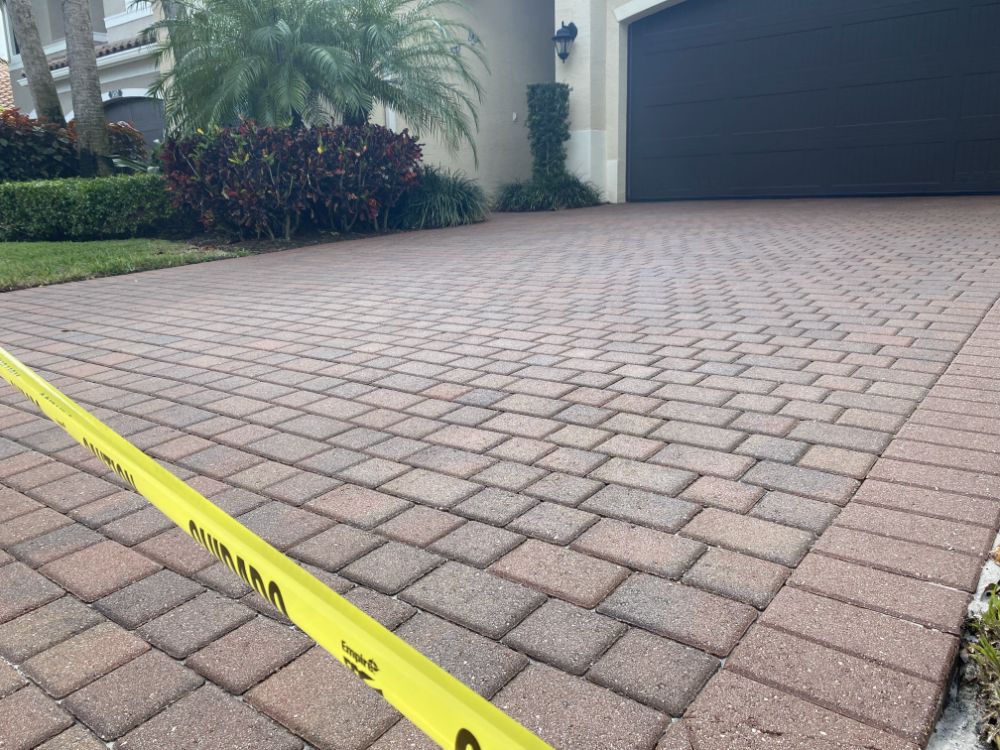
Central Indiana's climate creates a predictable seasonal rhythm of paver maintenance needs that municipalities can systematically anticipate, plan for, and budget with confidence. The Indianapolis-to-Bloomington corridor experiences four distinct maintenance seasons: a spring damage assessment and repair window following the freeze-thaw cycle (March through May), a summer construction and sealing season when optimal temperatures enable chemical curing and material adhesion (June through August), a fall preparation period for winter resilience (September through November), and a winter damage management period that balances snow removal effectiveness with paver surface protection (December through February). Marion County alone records 70 to 80 freeze-thaw cycles annually, with the freeze-thaw frequency highest between January and March — a period that simultaneously damages paver surfaces and prevents the warmer temperatures needed for effective repair. Understanding this seasonal rhythm and building a proactive maintenance calendar aligned with it transforms paver management from a reactive emergency program into a systematic, budget-predictable infrastructure stewardship program. This calendar draws on climate data from NOAA's Indianapolis Executive Airport station and performance observations from the Cultural Trail, Bloomington's B-Line Trail, and municipal paver networks throughout the corridor.
January and February: Winter Damage Management and Documentation
January and February represent the highest-risk period for paver surface damage in Central Indiana. Average low temperatures in Indianapolis in January are 19 degrees Fahrenheit, with minimum temperatures regularly reaching 0 to -5 degrees during polar vortex intrusions. Bloomington, situated at 820 feet elevation in the southern Indiana uplands, experiences somewhat moderated temperatures but similar freeze-thaw frequency. During this period, active repairs are generally not feasible: polymeric joint sand requires temperatures above 32 degrees and a dry surface for activation; paver sealer will not cure properly below 40 to 50 degrees; and compaction equipment is less effective in frozen base conditions.
The primary maintenance activities during January and February are documentation and snow/ice management. Maintenance crews should document observed surface distress — heaved pavers, frost-lifted units, visible cracks in natural stone, significant joint sand displacement — with GPS-referenced photographs and field notes. This winter damage documentation creates the input data for the spring assessment and repair prioritization process, allowing the agency to enter the spring maintenance season with a preliminary work scope already in hand rather than conducting the full damage assessment from scratch in March.
Snow and ice management during winter months has a direct impact on paver condition. Chloride-based deicing salts — rock salt (sodium chloride) and calcium chloride — are effective at melting ice but can accelerate concrete paver surface scaling and clay brick face spalling when used repeatedly at high application rates. Municipalities should consider chloride-alternative deicing products (such as potassium acetate or calcium magnesium acetate) for high-visibility decorative paver installations where surface appearance is a priority. Snowplow blade height and material specifications are also critical: rubber-edged blades with minimum 1/4-inch clearance above the paver surface prevent the edge-catching and unit dislodgement caused by standard steel blades.
March: Post-Winter Assessment and Repair Prioritization
March is the critical assessment month in Central Indiana's paver maintenance calendar. As temperatures begin rising above freezing consistently — Indianapolis's average March high is 50 degrees Fahrenheit — the full extent of winter frost heave damage becomes visible and accessible. The spring thaw typically runs from mid-February through mid-March in the corridor, and the most severe frost heave displacements may still be visible in early March before soils fully drain and settle.
The March assessment should cover all paver surfaces in the municipality's inventory systematically, using a GPS-enabled tablet for georeferenced documentation and a digital inclinometer and straightedge for ADA compliance measurements. Assessment personnel should record: all vertical displacements exceeding 1/4 inch (with measurement to 1/8-inch precision), cross slope measurements at locations where frost heave may have altered surface geometry, joint conditions including sand depletion, pavers that have been displaced entirely from the installation, cracked or broken units, and damaged detectable warning surfaces at curb ramps.
The assessment output should be a prioritized repair list organized by severity and traffic volume. Priority 1 repairs — any location with a vertical displacement exceeding 1/2 inch or a confirmed cross slope violation — should be scheduled for completion within 30 days. Priority 2 repairs — vertical displacements between 1/4 and 1/2 inch or conditions approaching slope violation — should be scheduled within 60 to 90 days. Priority 3 conditions — early-stage joint sand depletion, minor surface wear, low-severity heave under 1/4 inch — can be addressed in the scheduled summer maintenance window. This triage approach ensures that active ADA violations are addressed promptly while lower-priority conditions are batched for cost-efficient treatment.
April and May: Spring Repair Season
April and May are the primary repair months in Central Indiana. Average April temperatures in Indianapolis range from 45 to 65 degrees Fahrenheit, with May reaching 54 to 74 degrees — temperature ranges that accommodate most paver repair operations including re-leveling, base repair, unit replacement, joint re-sanding, and detectable warning surface installation. Polymeric joint sand requires daytime temperatures above 32 degrees and a dry surface, making late April through late October the effective application window.
Spring repair operations should address all Priority 1 and Priority 2 items identified in the March assessment. Re-leveling — the most common repair operation — involves carefully removing the affected paver units, removing or re-grading the disturbed bedding sand, re-setting units to the design elevation and slope, compacting with a plate compactor fitted with a rubber base plate, and sweeping in fresh polymeric joint sand. In locations where frost heave has recurred multiple consecutive years, the spring repair should include investigation of subsurface drainage conditions: recurrent heave at the same location is almost always a symptom of inadequate drainage rather than a surface-level issue.
May is also the optimal month for applying penetrating paver sealers to concrete paver surfaces if sealing is in the maintenance program. Sealer application requires air and surface temperatures above 50 degrees Fahrenheit, which May reliably provides in Central Indiana. Sealing concrete pavers with a penetrating silane or siloxane sealer reduces water absorption, improves freeze-thaw resistance, reduces chloride penetration from deicing salts, and can restore color depth to weathered surfaces. Sealing is typically appropriate on a 3- to 5-year cycle depending on traffic volume and exposure conditions.
June through August: Construction Season and Capital Projects
The June through August period represents the optimal window for capital paver projects — base repairs, section replacements, root barrier installations, and detectable warning surface replacements — because the combination of warm temperatures, long daylight hours, and minimal frost-damage risk enables the most productive and highest-quality construction outcomes. The risk of precipitation-related construction delays is moderate in June but decreases in July and August as Central Indiana enters its drier summer period.
Base repair projects — which require excavation, subgrade preparation, drainage correction, and aggregate base compaction — must be performed in dry weather conditions to achieve proper compaction moisture content in the base materials. Summer months minimize the risk of unexpected precipitation interrupting base compaction operations at critical stages. Root barrier installation, which involves trenching adjacent to existing pavers and paver tree wells, is also most efficiently executed in summer when soil conditions are workable without the saturated conditions common in spring.
July and August are appropriate months for joint re-sanding on moderate- and low-traffic paver surfaces where spring re-sanding was deferred due to moisture conditions. Polymeric sand performs best when activated in warm, dry conditions — daytime temperatures above 70 degrees Fahrenheit with no rain forecast for 24 hours after application allow optimal hardening. Crews should avoid joint re-sanding during rainy periods or when rain is forecast within 24 hours, as premature wetting before polymeric sand has hardened can cause surface haze and incomplete joint filling.
September and October: Fall Preparation and Pre-Winter Assessment
September and October constitute the critical fall preparation window in Central Indiana's maintenance calendar. The goal is to enter winter with the paver surface in the best possible condition: well-filled joints that resist water infiltration and freeze-thaw expansion, any unresolved summer repair work completed, drainage systems cleared and functional, and a documented pre-winter condition assessment that establishes the baseline for post-winter comparison.
September is the last practical month for polymeric joint re-sanding in most years. Daytime temperatures in Indianapolis average 60 to 75 degrees in September, providing acceptable conditions for polymeric sand activation. By October, morning temperatures can drop to the low 40s, increasing the risk of incomplete curing. Any locations identified in the spring assessment as Priority 3 for joint re-sanding that were not addressed in summer should be completed in September. Priority should be given to locations with the most significant joint sand depletion, as these are the locations most vulnerable to winter water infiltration and freeze-thaw joint expansion.
October is the month for pre-winter drainage inspection and clearing. Surface drainage patterns should be verified to confirm that water runs away from paver fields rather than ponding at low points. Drainage inlets, pipe outlets, and subsurface drainage outlets should be cleared of sediment and debris to ensure free-draining conditions before the first freeze. Drainage channels in tree well planting areas adjacent to paver installations deserve particular attention, as leaf litter accumulation in October can block drainage inlets just as fall rain and early freeze events create the most demanding drainage conditions of the year.
November and December: Winter Readiness and Equipment Preparation
November marks the transition from the maintenance season to winter operations readiness in Central Indiana. Indianapolis's average first frost date is October 22, and freeze-thaw cycling becomes frequent in November as daily temperatures begin oscillating across the 32-degree threshold. All warm-season paver repair and maintenance operations should be completed by November 1 to allow adequate curing time before freeze-thaw conditions begin.
November is the month for snowplow equipment inspection and specification confirmation. Municipalities should verify that all snowplow blades assigned to routes covering paver surfaces are equipped with rubber or urethane cutting edges, not bare steel. Blade height adjustment mechanisms should be tested and calibrated to allow operators to set minimum ground clearance of 1/4 inch above the paver surface. Deicing salt and alternative deicer inventories should be stocked to the season's anticipated needs based on the prior year's consumption data, adjusted for weather forecast outlooks.
December brings Central Indiana's first substantial snow events in most years, with Indianapolis averaging 1.1 inches in December rising to 5.8 inches in January. The maintenance crew's primary winter obligation is protecting paver surfaces from the mechanical damage caused by snowplow operations and the chemical damage caused by deicing products while maintaining safe pedestrian access. Post-event walkthroughs after major storms allow early identification of any paver units displaced by plow operations, enabling prompt re-setting before the unit creates a trip hazard or is damaged further by subsequent plowing.
Annual Budget Cycle Integration and Multi-Year Planning
The seasonal maintenance calendar must be synchronized with the municipality's annual budget cycle to ensure that maintenance appropriations are available when field operations need to be executed. Most Indiana municipalities operate on a January-December fiscal year, with budget requests typically due in September or October for the following calendar year. This timing aligns well with the October pre-winter assessment, which can generate preliminary estimates of the following spring's repair needs — providing input data for the budget request due at approximately the same time.
A well-structured annual paver maintenance budget contains three cost components. The routine maintenance allocation covers predictable recurring operations: spring assessment (staff time and equipment), joint re-sanding on the established cycle, sealer application on the established cycle, and post-storm inspections. This allocation should be based on the per-square-foot cost benchmarks from the Cultural Trail maintenance program ($2.50 to $3.00 per square foot annually) scaled to the municipality's paver inventory. The repair reserve covers the variable-cost spring and summer repair program driven by the previous winter's damage. Historical damage data from prior years' spring assessments allows this reserve to be estimated with reasonable accuracy, adjusting upward after severe winters and downward after mild ones.
The capital reserve component funds major rehabilitation and replacement projects identified in the ADA Transition Plan and the paver condition assessment database. This component should be budgeted at a consistent 3 to 5 percent of the paver network's replacement value annually, accumulating as a multi-year reserve that funds major projects when specific sections reach the end of their cost-effective repair life. Integrating the maintenance calendar, condition assessment database, ADA Transition Plan, and capital improvement plan into a unified paver asset management system transforms the annual budget process from a reactive scramble into a data-driven planning exercise that produces more defensible budget requests and better outcomes for paver infrastructure over the long term.