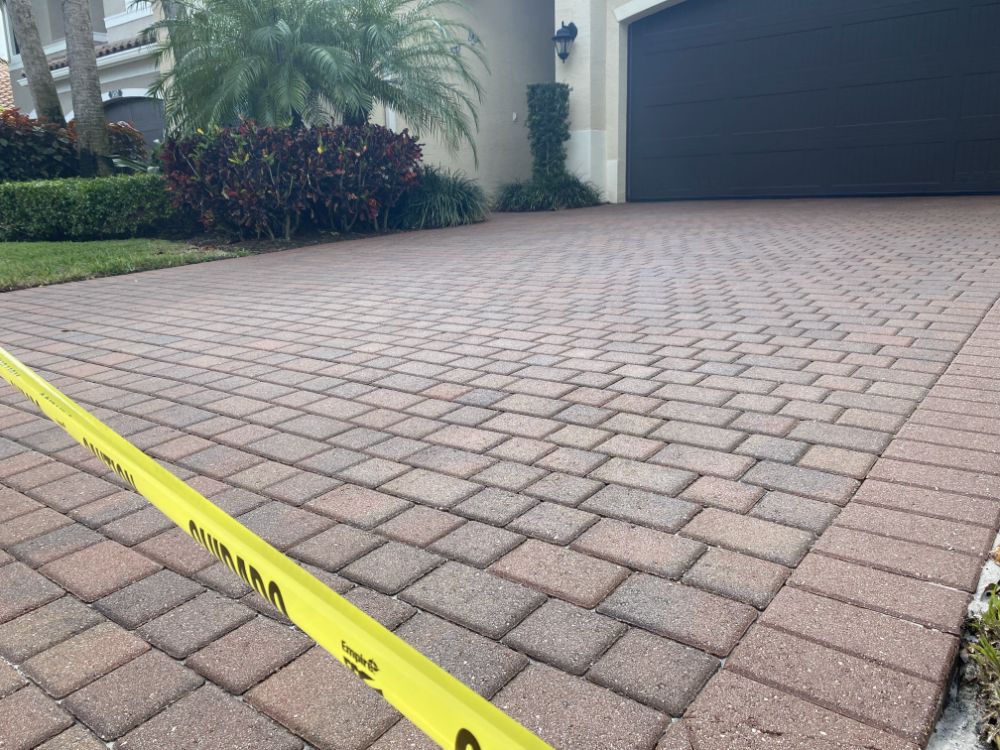
A systematic trip hazard assessment is the foundation of any effective municipal paver maintenance and ADA compliance program. Without accurate, repeatable, and thoroughly documented assessments, municipalities cannot prioritize repairs, track remediation progress, or defend against negligence claims. This field-ready checklist provides the equipment specifications, measurement procedures, severity categorization framework, and documentation standards that Paladin Pavers recommends for all municipal paver assessments across the Indianapolis-to-Bloomington corridor.
Required Assessment Equipment
A properly equipped paver assessment crew requires the following instruments: a calibrated digital inclinometer capable of measuring slope to 0.1-degree accuracy (for cross-slope and running-slope verification), a digital profilometer or electronic faulting meter for precise vertical displacement measurement to 1/32-inch resolution, a calibrated 10-foot straightedge for identifying surface undulation over longer spans, a measuring wheel or GPS-enabled distance measuring device for linear reference, and standard measuring tools including tape measures and gap gauges.
Documentation equipment should include a high-resolution digital camera (12 megapixels minimum) with GPS geotagging capability, a portable reference scale (ruler or measurement placard) for inclusion in photographs, weatherproof field data collection forms or a tablet device with GIS field data capture software, and high-visibility ground marking paint (temporary, water-soluble) for identifying hazards that require immediate remediation.
All measurement instruments must be calibrated according to manufacturer specifications prior to each assessment campaign. The digital inclinometer should be verified against a known reference surface, and the profilometer should be zero-checked at the beginning of each assessment day. Calibration records should be maintained as part of the assessment documentation to support the evidentiary value of measurements in any subsequent legal proceedings.
Pre-Assessment Planning and Logistics
Before deploying field crews, the assessment lead should prepare a survey plan that identifies all paver surfaces within the assessment scope, establishes a consistent numbering and reference system for segments (typically station-based or block-based), defines the assessment route to maximize crew efficiency and minimize disruption to pedestrian traffic, and coordinates with the municipality's traffic engineering department for any required lane closures or pedestrian detour signage.
The survey plan should reference the municipality's existing paver inventory or GIS database to ensure complete coverage. For municipalities without an existing inventory, the assessment itself becomes the baseline data collection effort, and the survey plan should include provisions for mapping paver surface extents, material types, installation dates (if known), and edge restraint types in addition to condition assessment data.
Weather conditions should be documented at the start of each assessment day, as temperature, moisture, and recent precipitation can affect measurements. Paver surfaces should be dry for accurate slip resistance assessment, and ambient temperature should be noted because thermal expansion can affect joint widths and surface levelness. Assessment should not be conducted on frozen surfaces or within 48 hours of a freeze-thaw event, as residual heave may not yet have fully manifested.
Vertical Displacement Measurement Procedures
Vertical displacement — the primary trip hazard measurement — must be taken at every joint or crack where one paver surface is visibly higher or lower than the adjacent surface. The profilometer or faulting meter is placed perpendicular to the joint with one foot resting on the higher surface and the measurement point contacting the lower surface. The instrument reads the vertical difference directly.
For paver surfaces, measurement points should include: every transverse joint (perpendicular to direction of travel) along the primary pedestrian path, every longitudinal joint adjacent to the primary pedestrian path where a wheelchair or mobility device could be deflected, all paver-to-concrete and paver-to-asphalt transitions, all utility access cover surrounds, and all tree well and planting bed edges within the pedestrian access route.
The ADA threshold is clear: any vertical displacement exceeding 1/4 inch (6 mm) is a trip hazard requiring remediation. However, for preventive maintenance planning, all displacements exceeding 1/8 inch should also be recorded as "monitoring" conditions that may deteriorate to non-compliance within one or two additional freeze-thaw seasons. This early-warning data enables proactive repair before violations develop.
Slope and Cross-Slope Measurement Procedures
Cross-slope measurements should be taken at a minimum of every 25 feet along the pedestrian access route, with additional measurements at any location where visual inspection suggests the surface is not level. The digital inclinometer is placed perpendicular to the direction of travel with its full base resting on the paver surface. The reading must not exceed 2.08 percent (1:48 ratio) for compliance.
Running-slope measurements should be taken at a minimum of every 50 feet along the pedestrian access route, with additional measurements wherever the grade appears to change. The inclinometer is placed parallel to the direction of travel. Readings exceeding 5.0 percent (1:20 ratio) indicate the route must be classified as a ramp and evaluated for handrail, edge protection, and landing requirements.
At curb ramps, slope measurements require particular care. The ramp running slope must not exceed 8.33 percent (1:12 ratio), the flared side slopes must not exceed 10.0 percent (1:10 ratio), and the landing at the top of the ramp must have a slope no greater than 2.08 percent in any direction. For paver curb ramps, settling and frost heave frequently alter the original ramp geometry, requiring complete ramp reconstruction rather than surface-level repair.
Severity Categorization System
A five-level severity categorization system allows municipalities to prioritize remediation resources toward the most critical hazards. Level 1 (Cosmetic): Surface staining, minor wear, or aesthetic issues with no accessibility impact — maintenance priority only. Level 2 (Monitoring): Vertical displacement of 1/8 to 1/4 inch, cross-slope of 1.75 to 2.08 percent, or joint widths approaching 1/2 inch — within compliance but approaching thresholds and should be flagged for monitoring.
Level 3 (Non-Compliant): Vertical displacement of 1/4 to 1/2 inch, cross-slope of 2.08 to 3.0 percent, or joint gaps slightly exceeding 1/2 inch — ADA non-compliant, requires remediation within the current maintenance cycle (6 to 12 months). Level 4 (Hazardous): Vertical displacement of 1/2 to 1 inch, cross-slope exceeding 3.0 percent, or multiple adjacent non-compliant conditions — presents an active safety hazard, requires remediation within 90 days.
Level 5 (Critical): Vertical displacement exceeding 1 inch, missing or severely displaced pavers, or collapsed base conditions — presents an imminent danger requiring emergency remediation (barricade immediately, repair within 30 days). Any Level 5 finding should be reported to the municipality's risk management office the same day and a temporary barricade or warning device should be placed before the assessment crew leaves the site.
Photographic Documentation Standards
Every identified hazard at severity Level 2 or above must be photographed according to a standardized protocol that supports both maintenance planning and legal defense. Each hazard should be captured in a minimum of three photographs: a wide-angle context shot showing the hazard location relative to surrounding features (buildings, intersections, landmarks), a medium shot showing the hazard in the context of the pedestrian path, and a close-up shot with a measurement reference scale placed adjacent to the hazard.
The close-up photograph must show the measurement instrument (profilometer, inclinometer, or gap gauge) in contact with the hazard surface, with the instrument display visible and readable. This creates a photographic record that directly links the measured value to the physical condition. The measurement reference scale (typically a ruler or custom placard with 1-inch increments and color calibration targets) provides dimensional verification independent of the instrument.
All photographs must be GPS-geotagged with latitude and longitude coordinates accurate to at least 3 meters. Photographs should be timestamped and stored in a file naming convention that links them to the corresponding assessment record. A recommended naming convention is: [SurveyDate]_[SegmentID]_[HazardNumber]_[ViewType].jpg — for example, 20250505_BLM-COURTSQ-01_H003_closeup.jpg.
GIS Mapping and Data Management Recommendations
Modern municipal paver assessment programs should utilize GIS-based data collection and management systems. Each identified hazard should be captured as a point feature in a GIS geodatabase, with attributes including: unique hazard identifier, location coordinates (latitude/longitude in WGS 84 datum), segment or block reference, hazard type (trip, slope, gap, surface, DWS), measured value, severity level, photograph file references, assessment date, and assessor identification.
Linear features representing paver segment extents should also be captured or verified during assessment, with attributes including: paver material type, installation date, segment length and width, edge restraint type, overall condition rating, and maintenance history. This linear asset inventory provides the denominator for condition metrics (e.g., percentage of paver network at each severity level) and supports lifecycle cost modeling.
Municipalities using Esri ArcGIS, QGIS, or other enterprise GIS platforms should configure a standardized paver assessment schema that integrates with their existing asset management database. For municipalities without GIS capability, field data collection using tablet-based survey apps (such as ArcGIS Field Maps, Fulcrum, or Survey123) provides a cost-effective entry point that generates GIS-compatible output without requiring desktop GIS software or specialized staff.