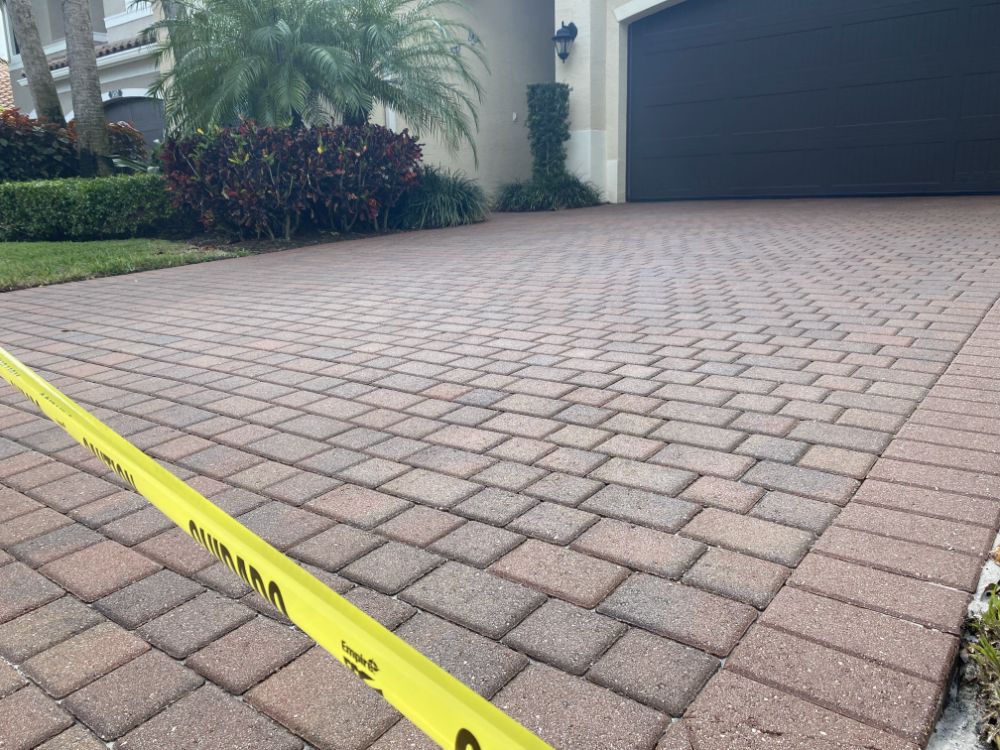
Material selection is one of the most consequential decisions a municipal agency makes when designing or replacing paver infrastructure. The choice between concrete interlocking pavers, clay brick pavers, and natural stone — including Indiana limestone and granite — affects not only first costs but also long-term maintenance burden, ADA compliance outcomes, freeze-thaw durability, and lifecycle economics over a 30- to 50-year service horizon. In Central Indiana's climate, where Marion and Monroe counties experience 70 to 80 annual freeze-thaw cycles and winter temperatures regularly reaching single digits Fahrenheit, material selection directly determines how frequently paver surfaces develop the trip hazards, slope violations, and surface degradation that trigger ADA liability exposure. This guide synthesizes ASTM material standards, INDOT specifications, and real-world performance data from the Indianapolis-to-Bloomington corridor to equip municipal engineers and public works directors with the technical foundation for evidence-based paver material decisions.
Concrete Interlocking Pavers: ASTM C936 Standards and Performance
Concrete interlocking pavers manufactured to ASTM C936, Standard Specification for Solid Concrete Interlocking Paving Units, are the most widely used material in new municipal paver installations throughout Indiana. The standard requires a minimum compressive strength of 8,000 psi (55 MPa), maximum water absorption of 5 percent, and demonstrated freeze-thaw durability through ASTM C67 testing. Units must also meet dimensional tolerances of ±1/16 inch in length and width and ±1/8 inch in thickness — tolerances that contribute directly to consistent surface profiles and ADA compliance.
The Indianapolis Cultural Trail — Indiana's most prominent municipal paver installation — uses tinted concrete hexagonal pavers manufactured to ASTM C936, a choice that reflects the material's combination of dimensional consistency, color availability, and durability under the high traffic volumes and aggressive snowplow operations the trail endures. At 10.6 miles and 680,000+ square feet, the trail has demonstrated over more than a decade of service that properly specified and installed concrete pavers can maintain ADA-compliant surfaces in Central Indiana's climate with a disciplined maintenance program.
INDOT's Design Manual Chapter 52 (Pedestrian Facilities) references ASTM C936 as the baseline standard for concrete paver specifications on state-maintained pedestrian facilities. Municipalities pursuing INDOT Local Public Agency (LPA) funding for paver projects are generally required to specify concrete pavers meeting or exceeding C936 minimums. One important consideration: concrete pavers can fade and mottle over time, and color matching for repairs in older installations requires careful specification to minimize visible patchwork in high-profile locations.
Clay Brick Pavers: ASTM C902 Standards and Historic Context
Clay brick pavers manufactured to ASTM C902, Standard Specification for Pedestrian and Light Traffic Paving Brick, are the defining material of Indiana's historic downtown districts and university campuses. ASTM C902 classifies brick by application (SX for severe weathering exposure, MX for moderate exposure, NX for protected use) and traffic type (Type I for pedestrian and light vehicular, Type II for pedestrian only). For Indiana municipal applications subject to freeze-thaw cycling and occasional service vehicles, SX classification Type I brick is the appropriate specification, requiring minimum compressive strength of 8,000 psi and maximum water absorption of 8 percent.
The natural variation in color, texture, and dimension characteristic of clay brick pavers creates both aesthetic value and compliance challenges. Individual brick units vary by up to 3/16 inch in thickness from production batch to batch and even within a single pallet — a variation that can contribute to surface irregularity in joints and the differential settling conditions that generate trip hazards. Historically significant brick paver installations, such as the Bloomington Courthouse Square district, Lockerbie Square in Indianapolis, and IU Bloomington's Old Crescent walkways, are particularly challenging to bring into perfect ADA compliance because sourcing dimensional-match salvaged or reproduction brick is often difficult and expensive.
Despite these challenges, clay brick pavers offer significant advantages for the right applications. Their natural fired clay composition provides excellent freeze-thaw resistance when properly specified (SX grade), and their warm red-brown tones are irreplaceable from a historic preservation standpoint. High-quality clay brick pavers have demonstrated service lives exceeding 80 to 100 years in well-maintained installations — a lifecycle that substantially exceeds the 30- to 40-year expectation for concrete pavers and makes their higher initial cost more competitive on a lifecycle basis.
Natural Stone Pavers: Indiana Limestone, Granite, and Bluestone
Natural stone pavers — primarily Indiana limestone, granite, and bluestone — appear most frequently in prestige civic spaces and historic renovations within the Paladin Pavers service area. Indiana limestone, quarried in Lawrence and Owen counties, holds a special significance in the state's architectural heritage and is specified in projects from the Statehouse grounds to IU Bloomington's historic core. ASTM C568 classifies Indiana limestone by grade (I, II, and III), with Grade I (Select) and Grade II (Standard) appropriate for pedestrian paving applications requiring consistent appearance and structural integrity.
Granite pavers — typically imported from quarries in Brazil, China, or New England — appear in high-end downtown streetscape projects and are specified to ASTM C615, Standard Specification for Granite Dimension Stone. Granite's exceptional hardness (typically 150,000+ psi compressive strength) makes it the most durable paver material in terms of surface wear resistance, but it also makes it more challenging to cut for custom dimensions and more expensive to repair when individual units fracture. Its smooth polished finishes can be problematic for ADA slip resistance in wet conditions; bushed, flamed, or sandblasted surface treatments are required for pedestrian surfaces.
From an ADA compliance standpoint, natural stone pavers present unique challenges. The inherent dimensional variation in quarried stone — even within a single block — means that stone pavers require more precise setting bed work to achieve consistent surface profiles. Limestone is more susceptible to freeze-thaw spalling and surface delamination than concrete or clay brick, particularly when exposed to chloride-based deicing salts. Municipal agencies considering natural stone should evaluate the total lifecycle cost carefully: while stone's visual permanence is compelling, the higher maintenance demands and repair costs often make it most appropriate for limited prestige areas rather than network-wide applications.
ADA Compliance Implications by Material Type
Each paver material creates distinctive ADA compliance patterns over its service life. Concrete interlocking pavers tend to develop trip hazards through differential settling of individual units — a failure mode that is typically localized and addressable through spot re-leveling without disturbing the broader installation. Their dimensional consistency means that ADA-compliant cross slopes and running slopes are easier to achieve and maintain during initial construction, reducing the frequency of slope violations over time.
Clay brick pavers develop trip hazards through a combination of settling, frost heave, and the gradual "working" of units caused by thermal expansion and contraction cycles. Because brick installations are often older and may have underlying drainage deficiencies, trip hazard development tends to be more systemic and widespread than in newer concrete installations. Joint erosion is also more pronounced in brick installations that have not been maintained with polymeric sand, as the narrower mortar joints (1/8 to 3/16 inch) are more vulnerable to water infiltration and freeze-thaw cycling than the wider sand joints (3/16 to 1/4 inch) typical of concrete interlocking pavers.
Natural stone pavers, when they fail, tend to fail in ways that are more difficult to remediate while maintaining ADA compliance. Limestone spalling creates surface irregularities that may not constitute a 1/4-inch vertical trip hazard but reduce surface stability and slip resistance. Granite unit fractures require unit replacement that may not match the surrounding stone's surface texture. The PROWAG R302.7 requirement for firm, stable, and slip-resistant surfaces applies regardless of material, and aging natural stone installations require more frequent surface condition assessment than concrete or brick.
Freeze-Thaw Performance in the Indiana Climate
Central Indiana's climate presents a rigorous test environment for paver materials. The Indianapolis metropolitan area averages 70 to 80 freeze-thaw cycles annually — defined as temperature transitions crossing 32 degrees Fahrenheit — with the greatest frequency occurring in January through March. The I-69/SR-37 corridor from Indianapolis to Bloomington spans multiple soil types, including expansive clay soils in Morgan and Monroe counties that amplify frost heave forces compared to the better-draining soils of northern Marion County.
ASTM freeze-thaw testing protocols differ by material. Concrete pavers under C936 must demonstrate acceptable performance in the ASTM C67 freeze-thaw test, which subjects units to 50 accelerated freeze-thaw cycles measuring mass loss and compressive strength retention. Clay brick under C902 must meet the SX durability classification's stringent requirements, which include demonstrated performance in geographic regions with severe frost action. Natural stone durability under freeze-thaw conditions is assessed through absorption and saturation coefficient testing under ASTM C97 for limestone and ASTM C97 and C170 for granite.
Field performance data from Central Indiana installations suggests that properly specified concrete and SX-grade clay brick pavers both perform acceptably through the local freeze-thaw regime when drainage is adequately maintained. The primary driver of material failure is not the material itself but the subsurface drainage condition: pavers of any material that are installed over saturated or poorly draining base courses develop frost heave conditions that generate trip hazards regardless of their inherent freeze-thaw resistance. This makes subsurface drainage maintenance the most important lifecycle variable for all paver materials in Indiana.
Lifecycle Cost Comparison for Municipal Budget Planning
Lifecycle cost analysis for paver materials must account for initial installation cost, expected service life, annual maintenance cost, and anticipated major rehabilitation and replacement cycles. In the Central Indiana market, representative cost ranges for properly specified and installed municipal paver systems are approximately as follows. Concrete interlocking pavers (ASTM C936): $18 to $28 per square foot installed, 30- to 40-year service life with regular maintenance, annual maintenance cost of $1.50 to $2.50 per square foot. Clay brick pavers (ASTM C902, SX grade): $22 to $35 per square foot installed, 40- to 60-year service life with regular maintenance, annual maintenance cost of $1.75 to $3.00 per square foot. Natural stone (Indiana limestone or granite): $35 to $75 per square foot installed, 50- to 100-year service life in appropriate applications, annual maintenance cost of $2.00 to $4.00 per square foot.
On a 40-year net present value (NPV) basis at a discount rate of 3.5 percent, concrete and brick pavers generally show comparable lifecycle costs when maintenance investments are properly sustained. Natural stone carries higher NPV costs in most municipal scenarios but may be justifiable in prestige civic spaces where aesthetic permanence and reduced replacement frequency are overriding values. The analysis changes significantly when ADA compliance costs are factored in: materials and installation methods that minimize trip hazard development rates reduce the frequency and cost of ADA remediation, which is a recurring expense that conventional lifecycle cost models often undercount.
Municipal agencies should resist the temptation to select materials based on first cost alone. A paver system installed at $18 per square foot that requires $3.00 per square foot in annual maintenance and generates $2.00 per square foot in annual ADA remediation costs will be more expensive over 20 years than a system installed at $25 per square foot with $1.50 in annual maintenance and $0.50 in ADA remediation. The ICPI (Interlocking Concrete Pavement Institute) lifecycle cost model provides a useful framework for this analysis and is available as a free tool to municipal engineers.
Material Selection for Repair and Replacement Compatibility
A frequently overlooked dimension of material selection is repair compatibility: the ability to match replacement units to existing installed pavers when spot repairs are needed. Concrete pavers present moderate compatibility challenges — units from a specific manufacturer and color run may not be available in identical form 10 to 15 years after initial installation, and concrete's tendency to fade means that new units may contrast visibly with weathered originals. Specifying a minimum 5 to 10 percent surplus of pavers at installation — stored under cover — provides a stockpile of matching units for early-life repairs.
Clay brick pavers present greater compatibility challenges because brick production is tied to specific clay bodies and kiln formulations that change over time. Historic brick installations may require sourcing matched salvaged brick from demolition sites or custom reproduction brick from specialty manufacturers — both of which add significant cost and lead time to repair projects. The historic downtown districts in Bloomington, Indianapolis's Lockerbie Square, and several Johnson County courthouse squares all face this challenge with their existing brick paver inventories.
Natural stone is the most difficult to match for repairs: each quarried block has unique color and texture variation, and matching stone from an active quarry to an installation from even 10 years prior is challenging. For Indiana limestone in particular, the quarry source, processing method, and age of the installation all influence appearance. Municipal agencies considering natural stone should either plan for the aesthetic reality of visible repair patches or commit to periodic network-wide replacement of worn sections to restore uniform appearance. Paladin Pavers maintains supplier relationships with Indiana limestone fabricators and salvaged brick brokers throughout Central Indiana to support compatibility-conscious repair specifications.