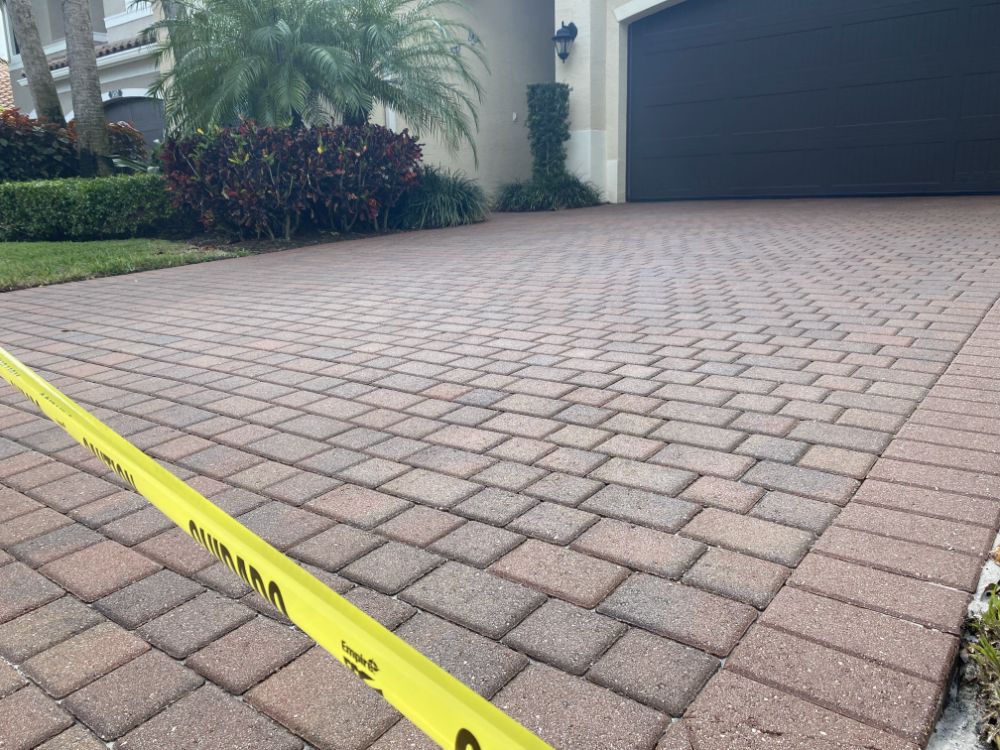
Preventive maintenance is the single most cost-effective strategy for extending the service life of municipal paver infrastructure and maintaining ADA compliance. Data from public works agencies across the Midwest consistently shows that municipalities with structured preventive maintenance programs spend 40 to 60 percent less on paver infrastructure over a 20-year lifecycle compared to agencies that rely on reactive repair. For the estimated 960,000 square feet of paver infrastructure spanning the Indianapolis-to-Bloomington corridor, that differential represents millions of dollars in avoided replacement costs, emergency repairs, and liability claims.
Annual Assessment Protocol
Every municipal paver maintenance program should begin with a comprehensive annual assessment conducted in late spring, after the final freeze-thaw cycle has passed and before the summer construction season begins. In Central Indiana, the optimal assessment window is typically late April through mid-May, when frost-related damage is fully manifested but repair conditions are favorable.
The annual assessment should evaluate every paver surface in the municipal inventory against the following criteria: vertical displacement (trip hazards exceeding 1/4 inch), cross-slope compliance (not exceeding 2.08 percent), running-slope compliance (not exceeding 5.0 percent), joint sand condition (width, depth, erosion), surface condition (cracking, spalling, staining, biological growth), edge restraint integrity, drainage performance, and detectable warning surface condition at all curb ramps.
Assessment data should be recorded in a GIS-compatible format that links to the municipality's ADA Transition Plan barrier inventory. This integration ensures that maintenance activities are documented as Transition Plan progress and that newly identified deficiencies are added to the remediation schedule. A standardized severity rating system — such as a 1-to-5 scale from cosmetic to critical safety hazard — allows prioritization of maintenance resources toward the highest-risk locations.
Joint Re-Sanding: Every 2 to 3 Years
Joint sand is the single most important maintenance element in a paver system. It provides lateral restraint that prevents individual pavers from shifting, distributes loads across the surface, and prevents water infiltration into the base and subgrade. When joint sand erodes — through rain washout, power washing, snowplow abrasion, or normal traffic wear — the entire paver system begins to deteriorate.
For municipal installations in Central Indiana, joint re-sanding should be scheduled every 2 to 3 years, with more frequent application in high-traffic areas (downtown sidewalks, transit corridors, Cultural Trail) and locations with heavy drainage flow. Polymeric sand, which contains a polymer binder that hardens after water activation, provides significantly better erosion resistance than conventional sand and is the recommended specification for all municipal applications.
The re-sanding process requires thorough cleaning of existing joints to the full depth of the paver, application of new sand material, compaction, and activation per manufacturer specifications. Improperly applied polymeric sand — particularly sand applied to wet surfaces or not adequately compacted — can fail prematurely and create a surface haze that is difficult to remove. Municipal agencies should require contractor certification in polymeric sand installation techniques.
Surface Cleaning: Annual Cycle
Annual surface cleaning serves both aesthetic and functional purposes. Accumulated dirt, organic debris, and biological growth (moss, algae, lichen) reduce the slip resistance of paver surfaces, potentially dropping the static coefficient of friction below the 0.60 minimum recommended under ADA Technical Assistance guidelines. In shaded areas — such as tree-lined sidewalks on Bloomington's Kirkwood Avenue or the forested sections of the B-Line Trail — biological growth can develop within a single growing season.
Cleaning methods for municipal pavers include low-pressure power washing (not exceeding 1,500 PSI to avoid joint sand displacement), hot water treatment for biological growth, and application of biocidal cleaning agents formulated for concrete and clay paver surfaces. Harsh chemical cleaners, high-pressure washing above 2,500 PSI, and mechanical scrubbing without subsequent re-sanding should be avoided as they accelerate joint sand loss.
Cleaning should be scheduled in late spring or early summer, timed to follow the annual assessment so that surface conditions are documented before cleaning and any post-cleaning deficiencies are identified while crews are mobilized. A coordinated assess-clean-repair sequence maximizes the efficiency of maintenance resources and minimizes disruption to pedestrian traffic.
Sealing: Every 3 to 5 Years
Sealer application protects paver surfaces from staining, UV degradation, chloride damage from winter de-icing, and water absorption that accelerates freeze-thaw spalling. For municipal installations, a high-quality penetrating sealer (not a film-forming sealer, which can reduce slip resistance) should be applied every 3 to 5 years depending on traffic volume, exposure conditions, and the specific paver material.
Clay brick pavers, which are common in Indiana's historic downtown districts, are more porous than concrete pavers and benefit from more frequent sealing on a 3-year cycle. Concrete pavers, including the hexagonal tinted units on the Indianapolis Cultural Trail, have lower porosity and typically perform well on a 5-year sealing cycle. Natural stone pavers, such as the Indiana limestone used on some IU Bloomington campus pathways, require specialized sealers formulated for sedimentary stone.
Sealer application must occur on clean, dry surfaces at temperatures between 50 and 90 degrees Fahrenheit, with no rain expected for at least 24 hours. In Indiana, the optimal sealing window is typically late May through mid-October. Sealing should be coordinated with joint re-sanding, as both operations require clean, dry conditions and the sealer should be applied after new joint sand has been installed and cured.
Seasonal Considerations for Indiana Climate
Indiana's continental climate imposes specific maintenance considerations that differ from warmer or more temperate regions. The Indianapolis metropolitan area experiences 70 to 80 freeze-thaw cycles annually, with soil freezing depths reaching 24 to 30 inches. The Bloomington area, located farther south in the physiographic transition zone between the Tipton Till Plain and the Crawford Upland, experiences slightly fewer freeze-thaw cycles (60 to 70 per year) but more variable soil conditions including areas of karst topography.
Fall preparation — typically October through early November — should include final joint sand inspection and top-up, drainage structure cleaning to prevent ice damming, and edge restraint verification. Winter operations should limit snowplow contact with paver surfaces by maintaining proper blade height settings and using rubber-edged blades where possible. De-icing materials should be limited to sodium chloride or calcium chloride at moderate application rates to minimize chloride damage to concrete pavers.
Spring recovery — late March through mid-April — is the critical transition period when freeze-thaw damage becomes visible. Frost heave displacement, joint sand washout from snowmelt, and surface spalling from chloride exposure are all most apparent during this period. Prompt spring assessment and repair prevents minor winter damage from compounding into major structural failures during the wet spring season.
Preventive vs. Reactive Maintenance: Cost Comparison
The economic case for preventive paver maintenance is compelling. Industry data from the Interlocking Concrete Pavement Institute (ICPI) and case studies from municipal public works agencies demonstrate that every dollar invested in preventive maintenance avoids three to five dollars in reactive repair and replacement costs. Over a 20-year lifecycle, municipalities with structured maintenance programs realize total savings of 40 to 60 percent compared to reactive-only approaches.
The cost differential is driven by several factors. Preventive maintenance (assessment, re-sanding, cleaning, sealing) preserves the existing base and subgrade, which represent 60 to 70 percent of the total installation cost. Once the base is compromised by water infiltration through eroded joints, reactive repair typically requires full excavation and base reconstruction — converting a simple re-sanding operation into a complete teardown and rebuild at 5 to 10 times the cost.
Liability costs further amplify the differential. A single trip-and-fall claim on a non-compliant paver surface can exceed the cost of an entire year's preventive maintenance program. Municipalities that can demonstrate an active, documented maintenance program are better positioned to defend against negligence claims because they can show reasonable care in maintaining accessible conditions.
Budget Planning Framework for Multi-Year Programs
An effective municipal paver maintenance budget should be structured as a multi-year program aligned with the municipality's capital improvement plan and ADA Transition Plan. A common budgeting approach allocates 1 to 2 percent of the original paver installation cost annually for routine maintenance, with a separate capital reserve fund accumulating at 3 to 5 percent annually for major rehabilitation and eventual replacement.
For a municipality managing 100,000 square feet of paver infrastructure installed at an average cost of $12 to $18 per square foot, this translates to an annual maintenance budget of approximately $12,000 to $36,000 and an annual capital reserve contribution of $36,000 to $90,000. These costs are typically eligible for funding through municipal street maintenance budgets, stormwater utility fees, special improvement districts, and in some cases federal Community Development Block Grant (CDBG) funds.
Budget requests should be supported by the annual assessment data and ADA Transition Plan remediation schedule, linking specific expenditures to documented deficiencies and compliance requirements. This data-driven approach strengthens budget justification during the appropriations process and demonstrates to federal auditors and DOJ reviewers that the municipality is making good-faith progress on ADA compliance.