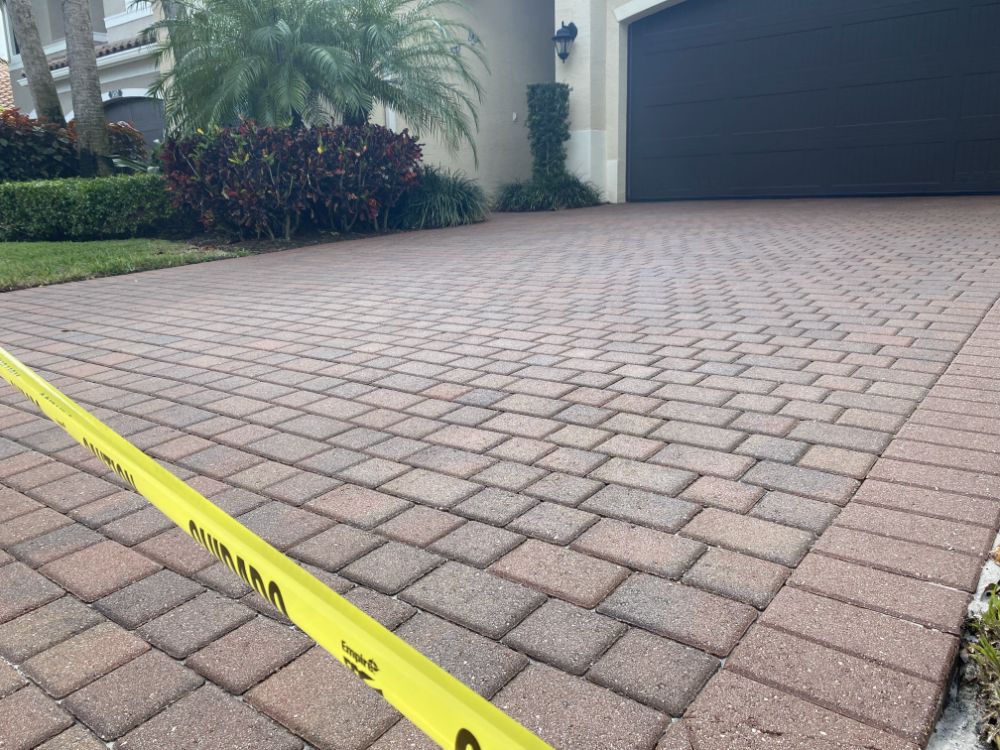
Central Indiana's continental climate subjects paver infrastructure to one of the most demanding freeze-thaw environments in the Midwest. The Indianapolis metropolitan area experiences 70 to 80 freeze-thaw cycles annually, with ambient temperatures crossing the 32-degree Fahrenheit threshold repeatedly throughout the winter months. These cycles drive a mechanical damage process — frost heave — that is the single largest cause of paver displacement, trip hazard creation, and ADA non-compliance in the Indianapolis-to-Bloomington corridor. Understanding frost heave mechanics, local soil conditions, and prevention strategies is essential for municipalities managing paver infrastructure in this region.
The Mechanics of Frost Heave in Paver Systems
Frost heave occurs when water in the soil beneath a paver installation freezes and expands. Water expands by approximately 9 percent when it transitions from liquid to solid state, but the actual heave displacement can be many times greater than this volumetric expansion alone would suggest. This is because of a phenomenon called ice lens formation: as the freezing front advances downward through the soil, water is drawn upward from unfrozen zones below through capillary action, feeding the growing ice lens and creating localized uplift pressures that can displace pavers by inches.
The severity of frost heave depends on three factors acting in combination: the presence of frost-susceptible soil (fine-grained soils with high capillarity, particularly silts and silty clays), the availability of water (either from groundwater, surface infiltration, or poor drainage), and sustained freezing temperatures that allow the freezing front to penetrate into the frost-susceptible layer. When all three conditions are present — which is common throughout Central Indiana — frost heave is virtually inevitable unless the paver system is designed to mitigate it.
In paver installations, frost heave manifests as differential vertical displacement between adjacent pavers or between sections of paver surface. Because ice lenses form unevenly — influenced by variations in soil moisture, compaction density, and thermal gradients — the heave is rarely uniform across a paver surface. This differential movement creates the trip hazards, slope violations, and joint disruptions that constitute ADA non-compliance.
Typical Failure Modes in Indiana Paver Installations
Frost-related paver failure in Central Indiana follows several predictable patterns. The most common is edge heave, where the perimeter of a paver installation lifts relative to the interior because the edges are more exposed to freezing temperatures and have less thermal mass. Edge heave is particularly prevalent at paver-to-concrete transitions, curb lines, and building interfaces where the thermal boundary condition changes sharply.
Spot heave occurs at isolated locations within the paver field, typically where subsurface moisture is concentrated — above broken utility lines, at drainage low points, near downspout discharges, or above underground springs. In Bloomington and the karst-influenced areas of Monroe and Owen counties, subsurface water movement through limestone solution channels can create unpredictable spot heave patterns that are difficult to anticipate from surface conditions alone.
Progressive joint failure is a secondary damage mode that begins when frost heave displaces pavers and opens joints beyond the retention capacity of the joint sand. Once joints are opened, water infiltrates more freely into the base, accelerating further heave in subsequent cycles. The displaced joint sand is washed away during spring thaw, leaving permanently widened gaps that exceed the ADA 1/2-inch maximum and allow further water infiltration — creating a self-reinforcing deterioration cycle.
Soil Conditions in Central Indiana
The soil conditions along the Indianapolis-to-Bloomington corridor vary significantly and directly influence frost heave susceptibility. The Indianapolis metropolitan area and northern portion of the corridor sit on the Tipton Till Plain, a glacial landform characterized by dense, poorly drained glacial till composed primarily of silty clay loam. This soil type is moderately frost-susceptible: its fine-grained texture provides the capillary conductivity needed for ice lens formation, and its poor drainage ensures that moisture is available throughout the winter.
Moving south along the corridor toward Martinsville and Bloomington, the soil transitions from glacial till to residual soils derived from the underlying limestone and shale bedrock of the Crawford Upland physiographic region. These soils tend to be thinner, better drained, and less uniformly frost-susceptible than the glacial soils to the north. However, areas of colluvial soil (slope wash) and alluvial deposits along creek valleys and drainage courses remain highly frost-susceptible.
Monroe County and the Bloomington area present the additional complexity of karst topography — a landscape shaped by the dissolution of underlying limestone by groundwater. Karst features including sinkholes, solution channels, and subsurface voids create unpredictable subsurface drainage patterns that can concentrate moisture beneath paver installations. Municipalities in the karst zone should conduct geotechnical investigations before major paver installations and specify base designs that account for potential subsurface water movement.
Annual Freeze-Thaw Cycle Counts and Climate Impact
Climate data from the National Weather Service and the Midwestern Regional Climate Center documents the freeze-thaw intensity across the Paladin Pavers service area. Indianapolis (Eagle Creek station) averages 73 freeze-thaw cycles per year, with extremes ranging from 58 to 92 cycles depending on winter severity. Bloomington (Monroe County Airport station) averages 65 cycles per year, with a range of 50 to 82.
The corridor communities experience intermediate values: Greenwood and Franklin average 70 to 75 cycles, Martinsville averages 67 to 72 cycles, and the smaller communities along the corridor fall within these ranges based on their latitude and elevation. Each cycle represents one opportunity for water to freeze and expand within the paver base and subgrade, incrementally displacing pavers and degrading joint sand integrity.
Climate projections from the Indiana Climate Change Impacts Assessment suggest that while average winter temperatures will increase over coming decades, the frequency of freeze-thaw cycles may actually increase in the near term as winters become more variable with more frequent temperature swings across the freezing threshold. This means that frost heave damage to paver infrastructure may intensify before it eventually diminishes — making prevention and maintenance investments more urgent, not less.
Prevention Strategies: Design and Base Preparation
The most effective frost heave prevention occurs at the design and installation stage. A properly designed paver base in Central Indiana should include: a minimum 6-inch layer of well-graded crushed aggregate base (INDOT No. 53 or equivalent) compacted to 95 percent Standard Proctor density, a 1-inch bedding layer of concrete sand or manufactured screen, and a geotextile separation fabric between the aggregate base and the native subgrade to prevent fine-grained soil from migrating upward into the free-draining base layer.
Drainage is the single most important design element for frost heave prevention. The aggregate base must be connected to positive drainage outlets — typically via perforated drain pipe at the base perimeter — so that water cannot accumulate in the base during winter. Edge restraints should be designed to allow water passage, and surface grading must direct runoff away from the paver surface rather than allowing ponding or infiltration at low points.
In areas with known high water tables or frost-susceptible soil conditions, additional prevention measures may be warranted: increasing the aggregate base depth to 8 to 12 inches, incorporating a layer of open-graded drainage aggregate (INDOT No. 2 stone) beneath the dense-graded base, installing subsurface drain tiles connected to the storm drainage system, or using closed-cell rigid insulation boards beneath the base to limit frost penetration depth. These measures add installation cost but dramatically reduce lifecycle maintenance expense.
Remediation Methods for Frost Heave Damage
Remediation of frost-heaved paver surfaces ranges from minor re-leveling to complete reconstruction depending on the severity of displacement and the condition of the underlying base. For minor displacement (up to 1/2 inch), individual pavers can be extracted, the bedding layer re-graded to the correct elevation and slope, and the pavers re-installed and re-compacted. This surface-level repair is effective when the aggregate base remains intact and the heave was caused by bedding layer displacement rather than subgrade movement.
For moderate displacement (1/2 inch to 2 inches), the bedding layer and upper portion of the aggregate base typically need to be excavated and reconstructed within the affected area. This may involve removing and stockpiling pavers over a larger zone than the visible disturbance, excavating 4 to 6 inches of base material, re-compacting the subgrade, placing new aggregate base, re-bedding, and re-installing the pavers. Drainage improvements should be incorporated during the repair to prevent recurrence.
Severe displacement (exceeding 2 inches) or recurring heave at the same location despite previous repairs indicates a fundamental design or drainage deficiency. Full reconstruction — excavating to the subgrade, correcting drainage conditions, installing geotextile separation, rebuilding the complete base and bedding system, and re-installing pavers — is the only durable remediation. While more expensive than surface-level repair, full reconstruction addresses the root cause and eliminates the cycle of repeated seasonal failure.
Monitoring and Early Intervention
Effective frost heave management requires systematic monitoring that identifies displacement early — before minor seasonal movement compounds into major structural distress. Municipalities should conduct post-winter assessments in late March to mid-April, after the ground has fully thawed, to identify new frost heave displacement and document changes from the previous year's condition.
Repeat measurements at fixed monitoring points allow tracking of progressive displacement over multiple freeze-thaw seasons. A paver surface that displaces 1/8 inch during its first winter, 1/4 inch by its second, and 3/8 inch by its third is displaying a clear trend toward non-compliance that warrants proactive intervention. Waiting until the displacement exceeds the 1/4-inch ADA threshold guarantees a code violation that could have been prevented with timely re-leveling.
Early intervention — re-leveling pavers before displacement exceeds 1/4 inch, re-sanding joints before gaps exceed 1/2 inch, and correcting drainage issues before they cause base saturation — is consistently less expensive and less disruptive than emergency remediation of critical failures. Municipalities that integrate frost heave monitoring into their annual paver assessment program consistently achieve better long-term surface performance at lower total cost.